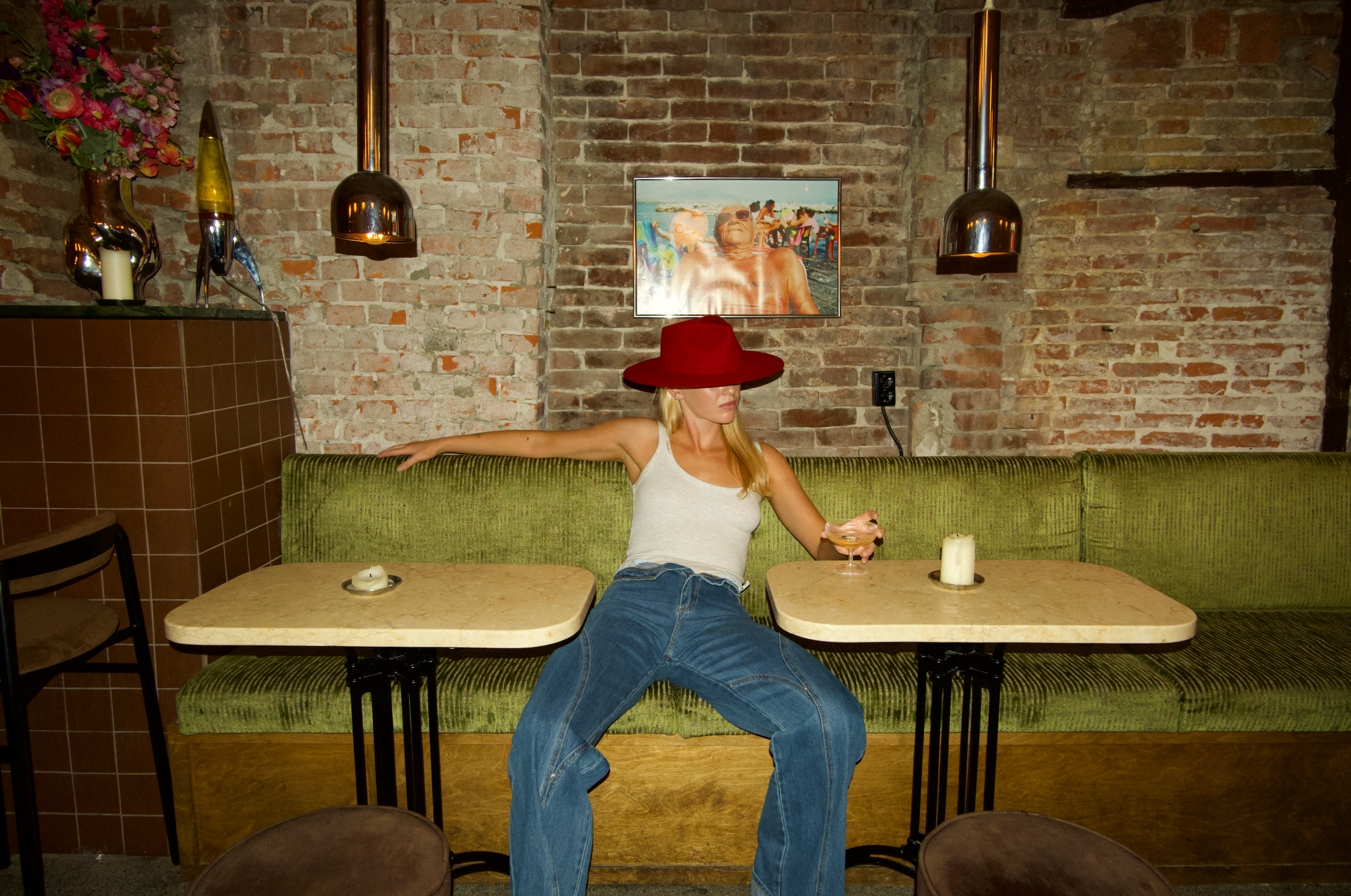
Article: The Fedora & Rancher Hat - from outlaws to It-Girls
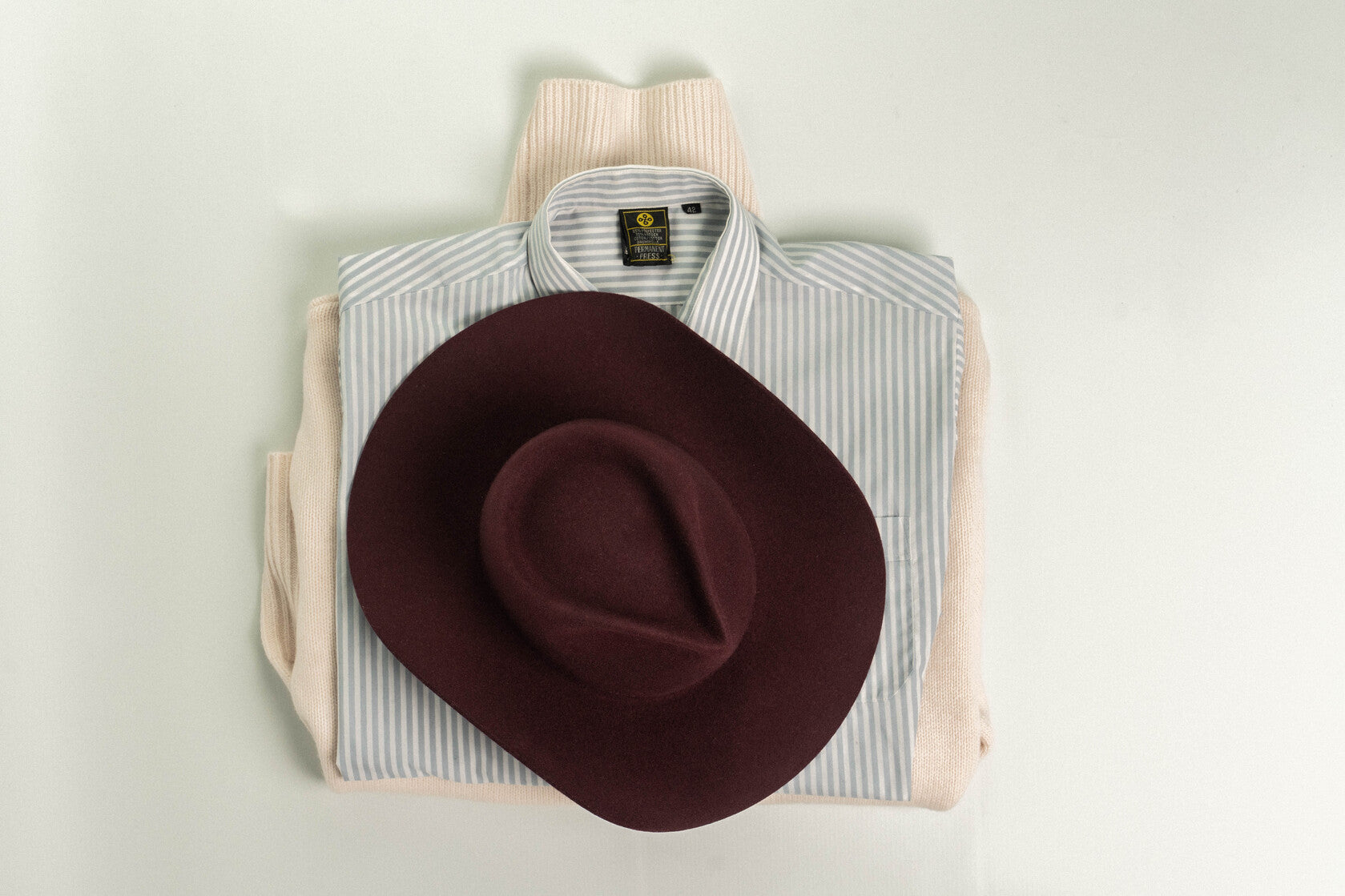
The Fedora & Rancher Hat - from outlaws to It-Girls
Andora Style History - 8 min read
Some things are just built to last. Not because they're safe or predictable - but because they carry something. An energy. A history. A quiet insistence on being noticed.
The fedora and the rancher hat are two of those things. Between them, they've sat on the heads of rebels, icons, festival queens, and women who simply refused to blend in. They've survived over a century of fashion cycles, trend forecasts, and the relentless churn of fast fashion - and they're still here. Still relevant. Still turning heads.
This is how they got here.
Where it all started - the 1880s
The fedora was born in 1882, and it was born for a woman.
The name comes from a play called Fédora, written by Victorian playwright Victorien Sardou. The lead character - Princess Fédora Romanoff, a fierce and independent woman navigating a world designed to undermine her - wore a soft, centre-creased hat with a wide brim throughout the production. Audiences loved it. Women in particular.
Within a year, the style had jumped from the stage to the streets. Women's rights activists and suffragettes adopted it almost immediately, wearing it as a quiet but unmistakable symbol of independence. It was practical, it was strong, and it was deliberately different from the fussy, decorated hats women were expected to wear at the time.
From the very beginning, the fedora was a feminist hat. That's not revisionist history - that's just the origin story.
The rancher hat has a slightly different lineage - rooted in the working landscapes of the American West, where a wide, flat brim wasn't a style choice but a survival one. Shade from the sun, protection from the rain, visibility on horseback. The rancher hat was utility first. But utility, as it turns out, has a way of becoming iconic.
The 1920s and 30s - enter the golden age
By the 1920s, the fedora had crossed over from women's fashion into menswear - and it had done what only the greatest style pieces do: it looked completely different on different people, and completely right on all of them.
Jazz musicians wore them low over one eye. Gangsters wore them pulled down tight. Detectives in black-and-white films wore them with the brim flipped up at the back and a cigarette in the corner of their mouth.
But women never actually gave it up. They just wore it differently - with suits, with wide-leg trousers, with the casual authority of women who had just spent a decade proving they were capable of far more than anyone had assumed.
The 1930s cemented the fedora as the ultimate power hat. Not because it was assigned to any one identity - but because whoever wore it looked like they were in charge.
The 1960s and 70s - counterculture takes over
Fashion, like everything else, got political in the sixties. And the rancher hat - with its deep roots in working-class culture and the American frontier - became a symbol of something more complicated and more interesting than its origins.
Artists wore it. Musicians wore it. The counterculture absorbed it and made it strange and beautiful. Janis Joplin wore wide-brimmed hats stacked with feathers and flowers and absolutely zero apology. Joni Mitchell wore them soft and tilted on long-haired, windswept afternoons. Stevie Nicks - perhaps the most iconic hat woman of the entire twentieth century - wore them as extensions of her own mythology.
In the seventies, the wide-brimmed hat became shorthand for a specific kind of woman. Creative. Free. Not particularly interested in your opinion. The brim wasn't just fashion - it was a frame. A way of controlling how you were seen, of presenting yourself as a work of art.
Sound familiar?
The 1990s and 2000s - fashion's complicated middle chapter
Every great style goes through a period of being considered either passé or ironic, and the fedora had its uncomfortable phase in the early 2000s. Worn badly, styled carelessly, associated with the wrong kind of energy, it spent a decade fighting for its reputation.
The rancher hat fared better - it slipped comfortably into the boho-chic aesthetic that dominated the mid-2000s, worn with flowy dresses and leather boots at Coachella and every Coachella-inspired festival that followed. The wide brim worked perfectly with flower crowns, with layered jewellery, with the maximalist femininity that was having its moment.
This is where the modern story of the rancher hat really begins. Not in the 1880s or the 1970s - but in a field in California, at a music festival, on a woman who wanted to look extraordinary and found that a hat was exactly what her outfit was missing.
The 2010s - the hat as statement piece
Fashion in the 2010s moved fast and moved in all directions at once. Normcore. Athleisure. Cottagecore. Dark academia. The hats moved with it.
The fedora came back - properly this time - carried by a new generation of women who wore it with absolute conviction. Not as costume, not as irony, but as a genuine expression of personal style. Paired with oversized blazers and straight-leg jeans. With slip dresses and chunky boots. With whatever the wearer decided it worked with, because confidence has a way of making rules irrelevant.
The rancher hat became a festival essential. Not just at Glastonbury or Coachella - but at every gathering where creative women wanted to look intentional. The wide flat brim photographs beautifully. It creates shade without hiding your face. It works in thirty-degree heat and it works in a muddy field. It is, in practical terms, a near-perfect festival hat.
Brands started taking notice. Premium hat labels emerged. The market for handcrafted, high-quality wool hats - as opposed to cheap fast-fashion versions - started growing because women who genuinely loved hats were done buying ones that fell apart after a summer.
2020s - where we are now
The hat is no longer a seasonal accessory. It's a year-round statement piece, and it's worn by a specific kind of woman who has stopped waiting for permission to look exactly how she wants to look.
She wears her Rancher to a summer festival with a vintage slip dress and barely-there sandals. She wears her Mustang to a gallery opening with a tailored coat and a look on her face that says she knows something you don't. She wears it to a birthday brunch, to a market, to a Sunday afternoon that doesn't have a name but somehow calls for a hat.
The modern hat woman isn't performing a character. She's just herself - but turned up. The hat isn't a disguise. It's an amplifier.
Sustainability is part of this shift too. Premium wool hats, made by hand from quality materials, last for years - sometimes decades. In a culture that's increasingly uncomfortable with the churn of fast fashion, a hat you can wear for life carries a different kind of value. It's an investment. A considered choice. Something you pass on.
The festival chapter - why hats and music belong together
There's something specific about hats and festivals that goes beyond practicality, beyond sun protection, beyond the fact that a wide brim keeps the rain off your shoulders.
Festivals are one of the last spaces where women can dress with complete creative freedom and zero social consequence. Where more is more. Where a hat that would raise an eyebrow at the office is completely, naturally, perfectly at home.
The rancher hat works at festivals because it's a commitment. It says you dressed with intention. It says you planned this look. It gives an outfit a focal point, a finishing detail that pulls everything else into place.
The Mustang works at festivals because it has history. Because it carries the energy of every iconic woman who wore a fedora before you. Because it photographs like a dream and because the right hat, on the right woman, in the right light, is the most effortlessly cool thing in any crowd.
Both of them work because they're real. Not trend pieces. Not throwaway. Made from wool, made by hand, made to be worn.
Andora - built for women who want both
Andora was founded in Groningen in 2023 by a hat lover and a marketer who believed that a great hat should be accessible, handcrafted, and honest. Made from 100% premium wool. Handmade in Portugal, one by one. Designed for the passionate, creative, and yes - sometimes chaotic - women who know exactly what they want and just need to find the hat that proves it.
The Mustang carries the fedora's century-long legacy forward. Teardrop crown, curved brim, the same quietly commanding energy it's always had.
The Rancher carries the wide-brim tradition - straight, flat, fearless. Made for the woman who knows that the wider the brim, the stronger the statement.
Both are made to wear for life. Both are made to be seen.
The hat was never just a hat. It was always a statement.
The women who first wore fedoras in the 1880s knew it. The festival queens of the 1970s knew it. The creative, chaotic, passionate women of 2025 know it too.
You're not the first woman to put on a wide-brimmed hat and feel like a different, better, more herself version of who she already was. You won't be the last.
But the one you find - the colour, the shape, the style that makes you pause in front of the mirror for a second - that one is yours.
Ready to find yours?